Stage 2 · Express meaning with simple shapes, features, people, and movement
4 sectionsEstimated 60 min
01 / 04
Complex pictures are combinations of simple shapes
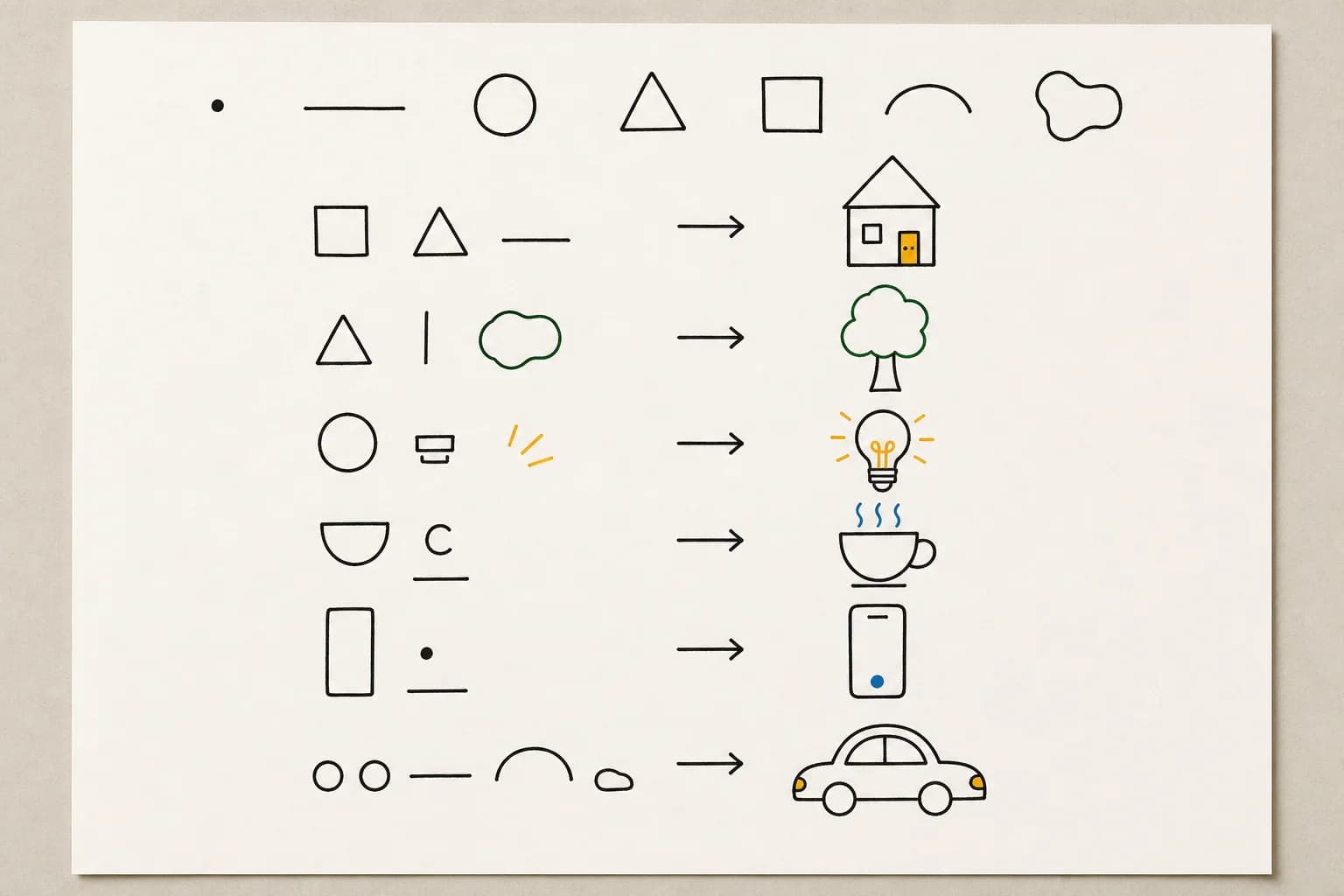
Forget “I cannot draw.” You need only seven building blocks:
dot, line, circle, triangle, square, arc, and organic shape.
They form a visual alphabet. A house is a square plus a triangle. A speech bubble is a rounded box plus a tail. A database is a rectangle with two arcs.
Visual alphabet · 01Do not copy an outline. Find the basic shapes inside an object. Fewer shapes make you faster and give your drawings a consistent style.
Draw three rows:
each basic shape five times
each shape at small, medium, and large sizes
five objects made from only two shapes
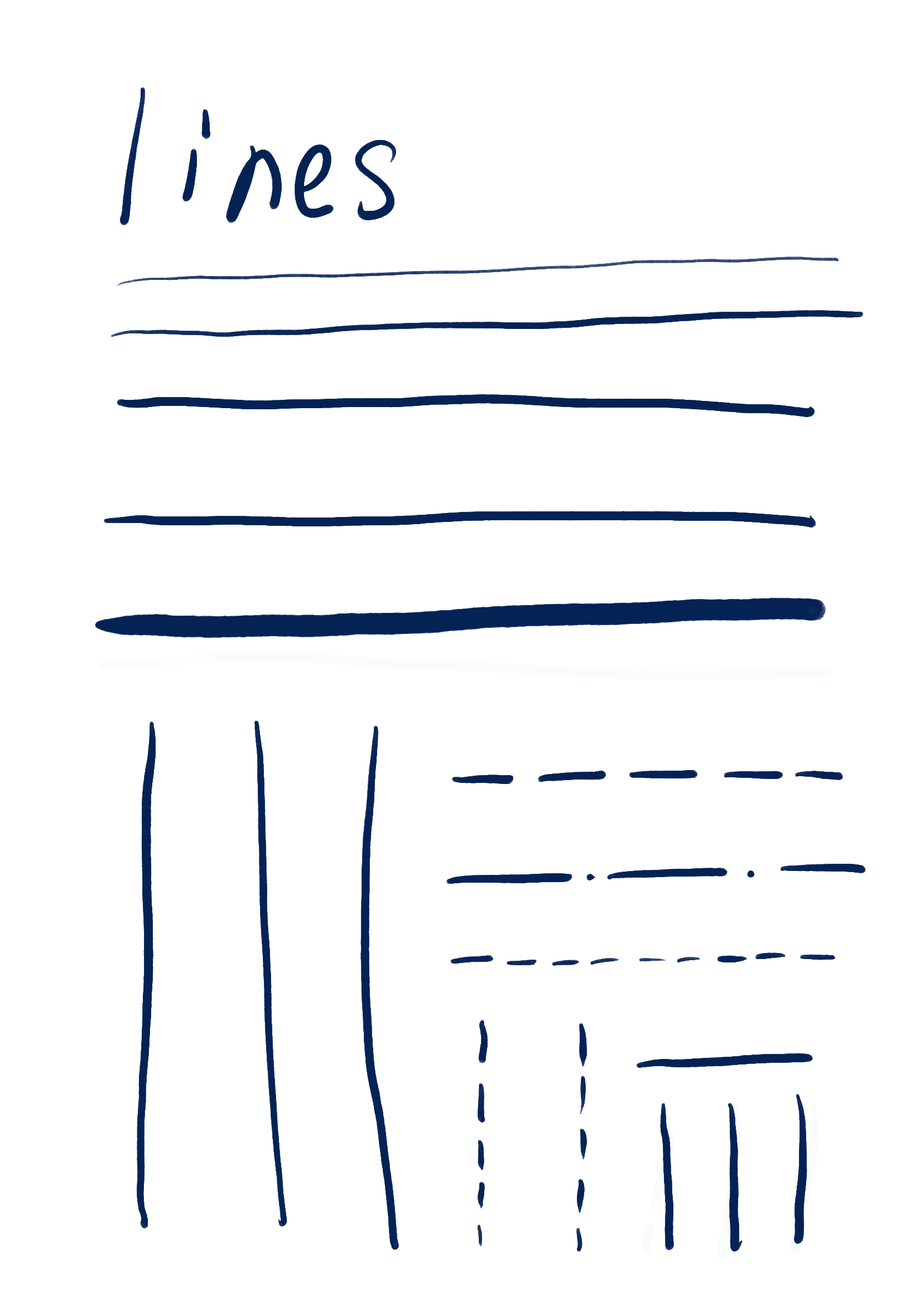
Basic lines · 01A useful line does not need to look ruler-straight. Practise a steady stroke first, then use weight for importance and solid or broken lines for confirmed versus tentative ideas.
02 / 04
Features matter more than detail
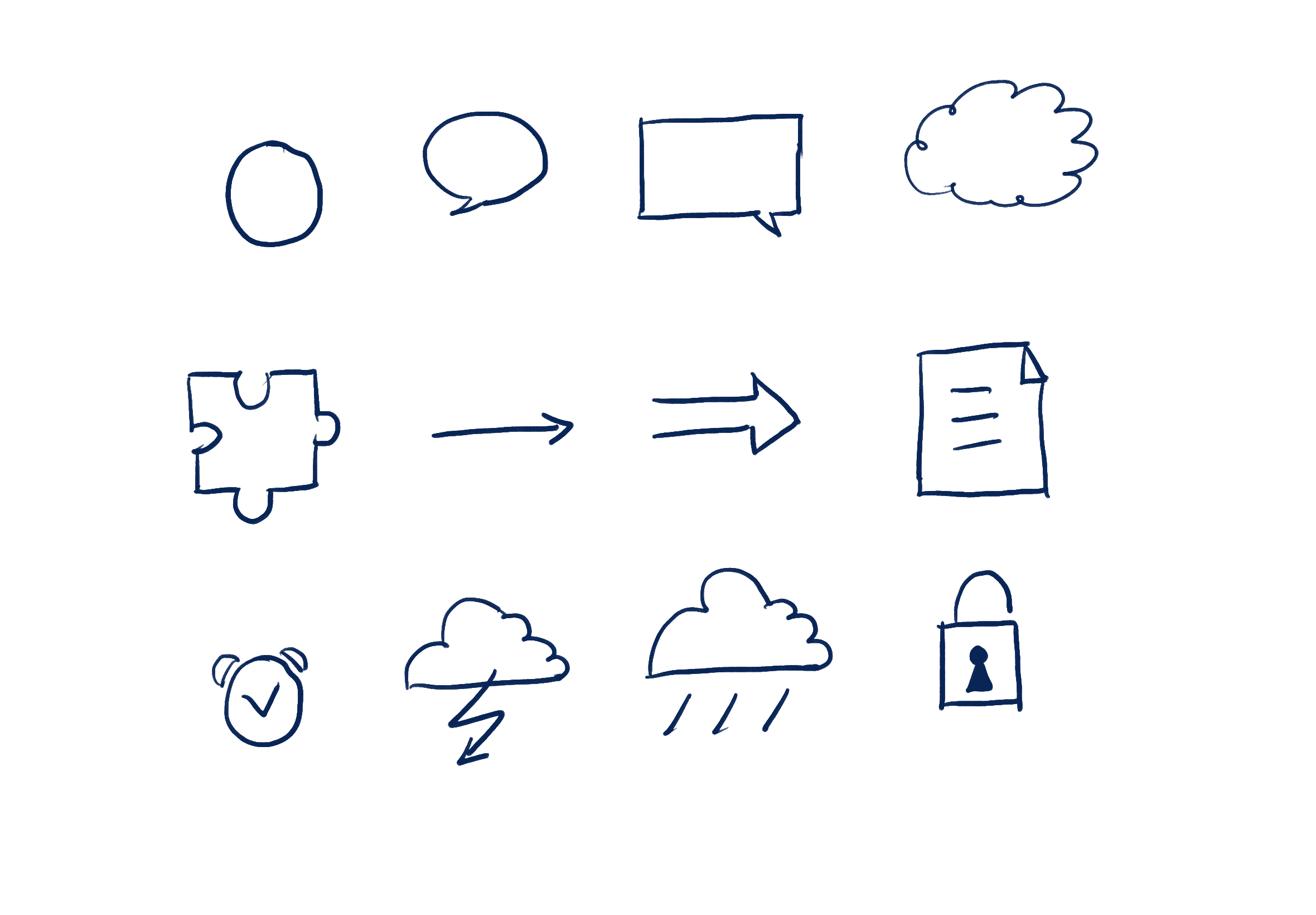
People recognize an object because you kept its distinctive feature, not because you drew every detail.
Feature practice · 01Each symbol keeps only a few identifying features. It does not need to be complete; the reader only needs to recognize its category and purpose quickly.
A three-step test
Find the category: mostly round, square, or triangular?
Find the feature: what could you not remove?
Remove detail: delete every line that does not help recognition
Choose camera, bridge, robot, or gift. Draw it three times:
once from instinct
once with only three basic shapes
once with only its most distinctive feature
Show the third drawing to someone. If they recognize it within two seconds, it is good enough.
03 / 04
Stop inventing every symbol from scratch
A visual vocabulary is a set of simple symbols you can reuse. The most useful library is not the largest one. It is the one that matches your work.
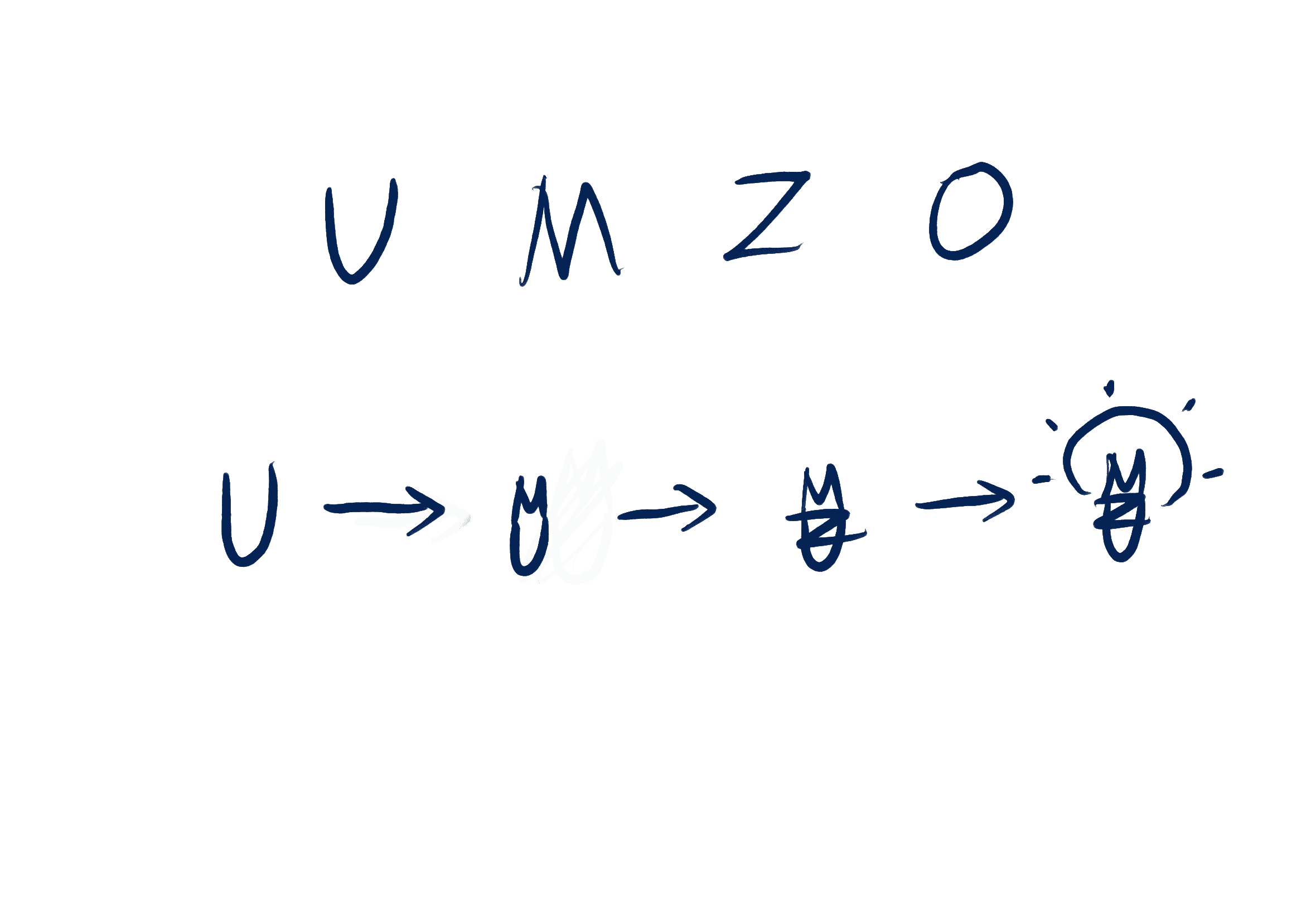
Letters are shapes too. An uppercase A can become a mountain, S a path, and O a head or magnifying glass. You do not need to choose between writing and drawing.
Letters into shapes · 01Do not treat a letter only as text. Rotate it, overlap it, or add one line, and it becomes the starting point for a new picture.
Draw a 4 × 4 grid and fill it with the 16 concepts you use most. Each cell gets a word, one minimal symbol, and one alternative.
04 / 04
Draw a person in five seconds
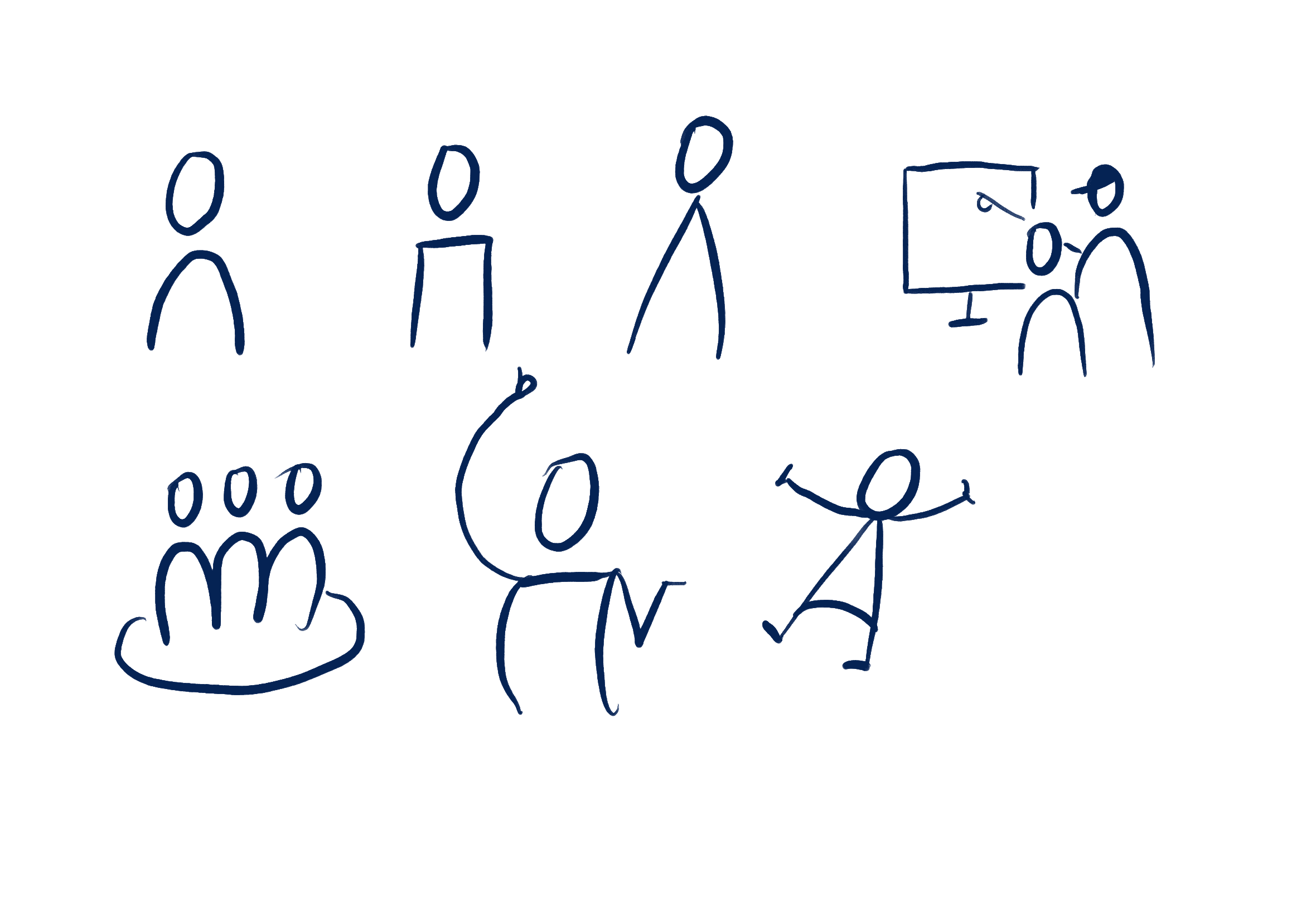
People give an abstract system a point of view. A circle, a body, and two legs are enough. The pose carries the meaning.
People atlas · 01Choose one basic person you can repeat reliably. Copy it, then change the number of people, arms, and body direction to show roles, collaboration, and action.
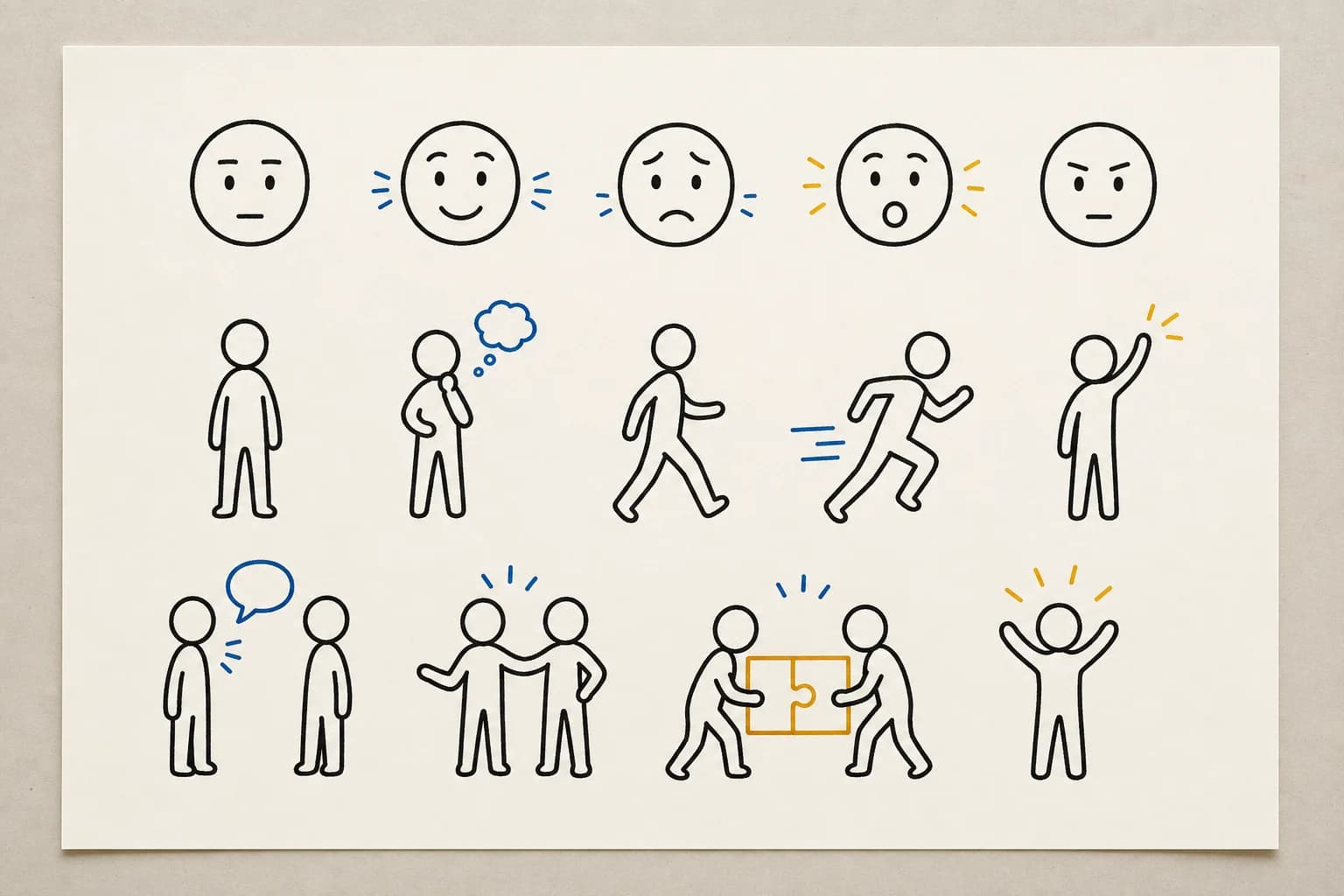
Once the basic person is stable, add information through expression and pose.
People atlas · 02A person does not need a complete face. Eyebrows and the mouth show emotion; arms, body angle, and legs show action.
Faces: change only two things
raised eyebrows: surprise or a question
inward eyebrows: concern or focus
mouth curved up: satisfaction
mouth curved down: frustration
Action: draw the line of movement first
Before the person, draw one line for the body direction: upright, leaning, recoiling, or running. Add the head and limbs to that line.