Untacit.

Interactive course

Explain an Idea Clearly

Stage 4 · Explain complexity with relationships, time, process, metaphor, and story

4 sectionsEstimated 75 min
01 / 04

Compress first, then connect

Complex content is not difficult because it contains many words. It is difficult because its relationships are hidden. Start by compressing sentences into movable keywords.

Keep four kinds of words:

  • people — who participates
  • objects — what is used or changed
  • actions — what happens
  • outcomes and unknowns — what changes and what remains uncertain

Then choose one of four relationships:
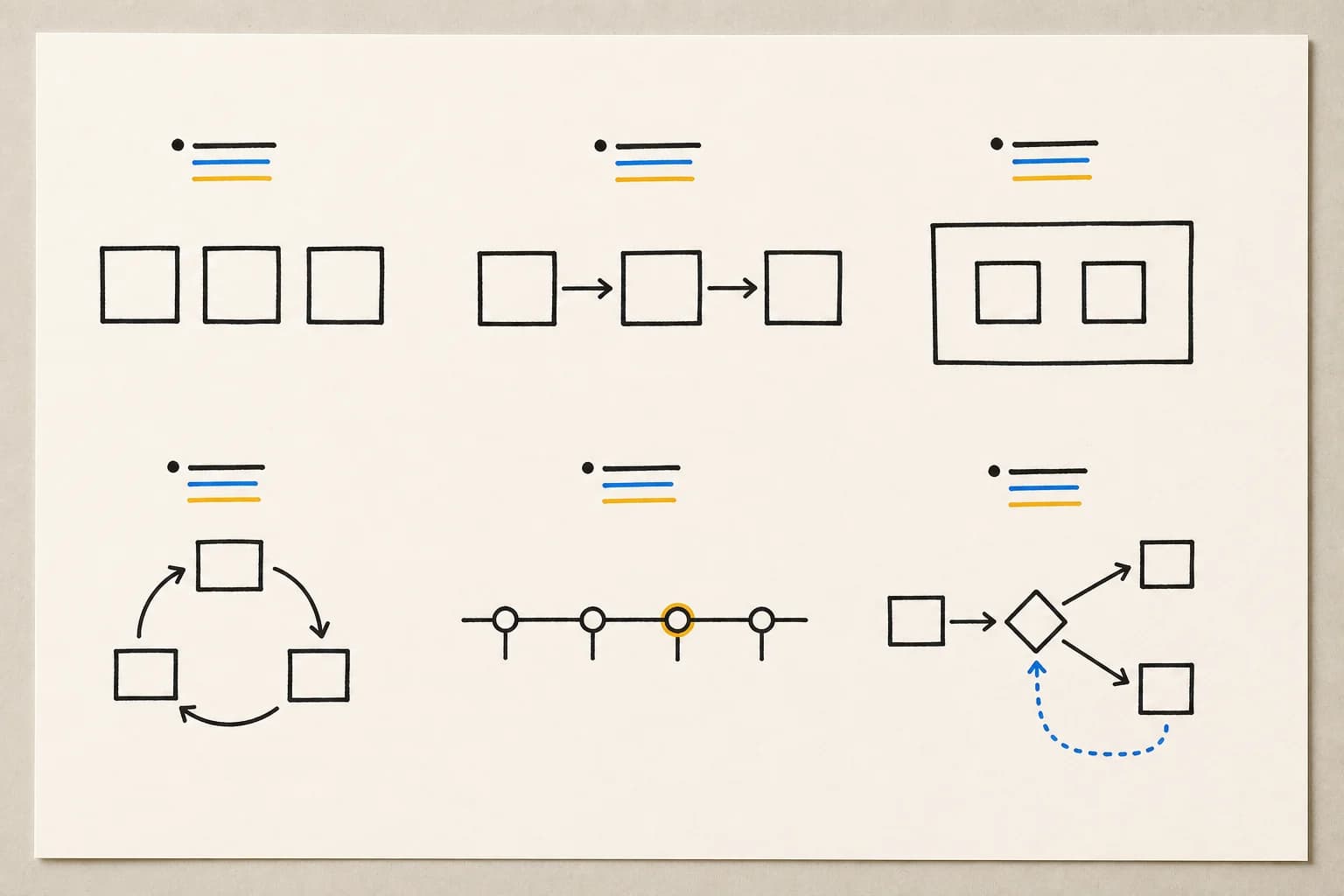
A hand-drawn atlas of parallel, causal, contained, feedback, timeline, and process relationships
Relationship atlas · 01The same boxes mean completely different things when the connection changes. A relationship is not decoration; it must read as a sentence.

Find a paragraph of 80–120 words:

  1. remove adjectives and background detail
  2. circle no more than six keywords
  3. name the relationship between each pair
  4. draw only the three relationships that could change the conclusion
02 / 04

Make change visible

When you need to explain why change matters now, a visible difference and a timeline are often stronger than more arguments.

Both sides must use the same comparison dimensions. Otherwise the page looks comparative but tells two unrelated stories.

Time: draw the line before the events

  1. draw a line from left to right
  2. mark the beginning, now, and target
  3. add only events that changed the direction
  4. use weight or spacing to show pace
  5. draw future events with a dotted line

Choose one recent change and draw it twice:

  • a left/right comparison: before vs. after
  • a timeline: beginning → turning point → now → next

Which version explains “why” more clearly?

03 / 04

Process shows how; metaphor shows what it is like

A process explains steps, decisions, and feedback. A visual metaphor maps an abstract concept onto familiar space.

Find five things in a process

  1. the starting state
  2. the person taking action
  3. the decision point
  4. the retry or return path
  5. the observable change at the end

Use rounded boxes for actions, a fork or diamond for a decision, and a returning arrow for a retry. Keep background implementation detail out of the main path.

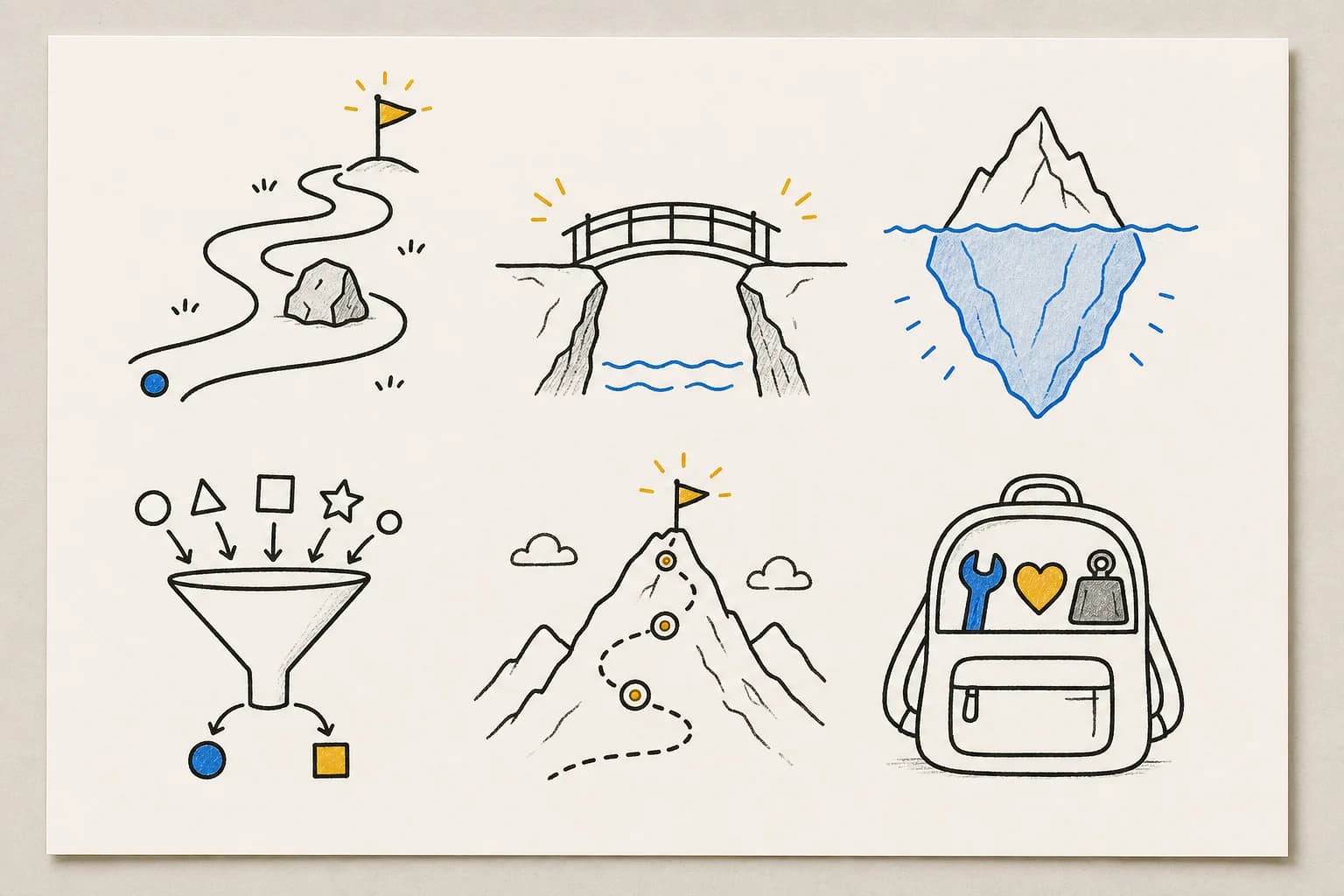
Six hand-drawn visual metaphors: path, bridge, iceberg, funnel, mountain, and backpack
Visual metaphors · 01A path suggests a journey, a bridge closes a gap, an iceberg separates visible from hidden, a funnel filters, a mountain shows challenge, and a backpack carries resources or burden.

Choose an abstract word such as trust, growth, technical debt, or transformation. Define it concretely, choose one metaphor, and label what each part represents.

04 / 04

Turn structure into a story people can follow

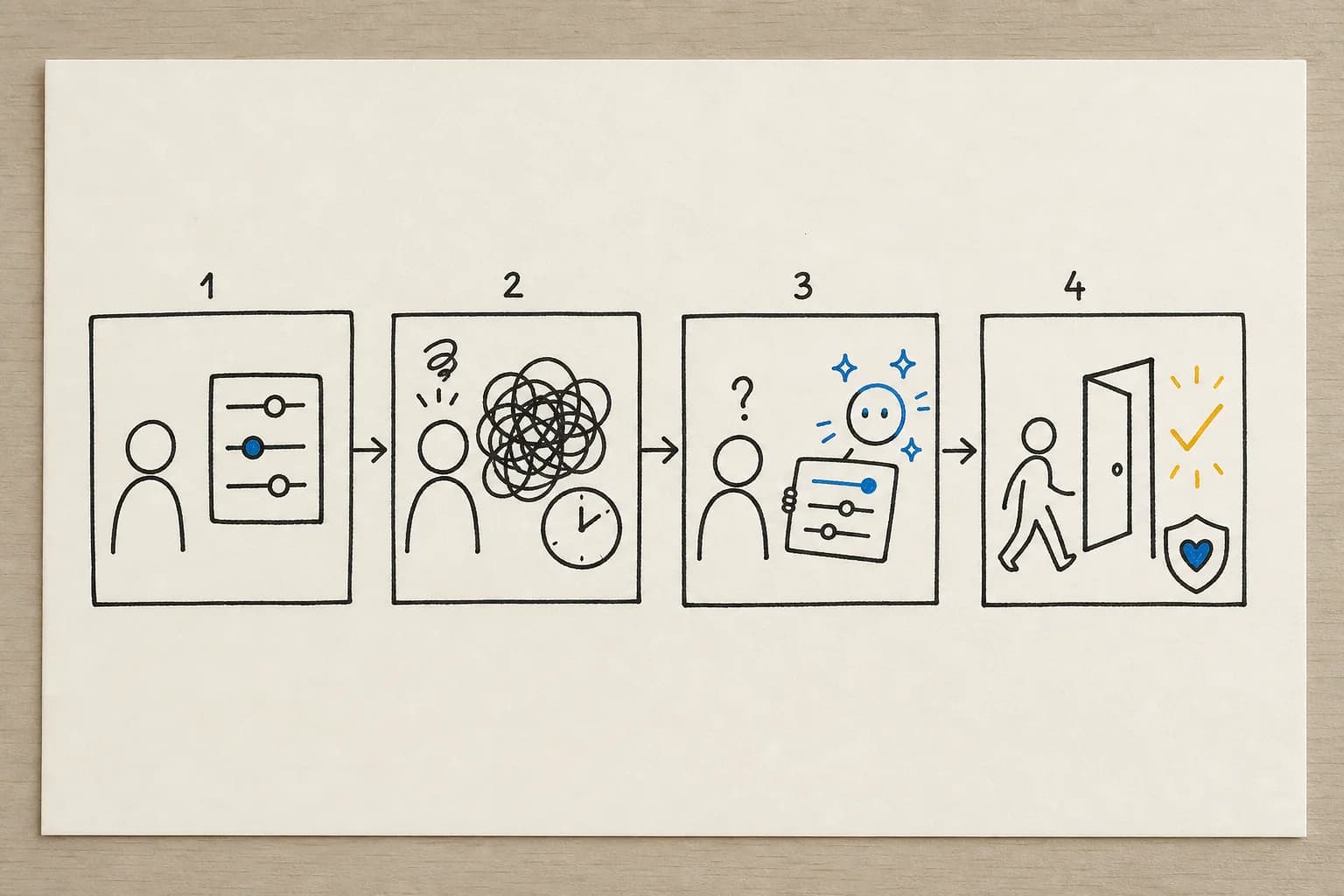
A story gives information an order. Four frames are enough to explain a change:

  1. Context — who wants to do what?
  2. Tension — what gets in the way?
  3. Action — what decision changes the situation?
  4. Result — what observable change follows?
A four-frame sketch of a setup experience: context, obstacle, assistance, and observable result
Four-frame storyEach frame has one job. Write one sentence in every frame, add the borders, then replace words with a few people and symbols.

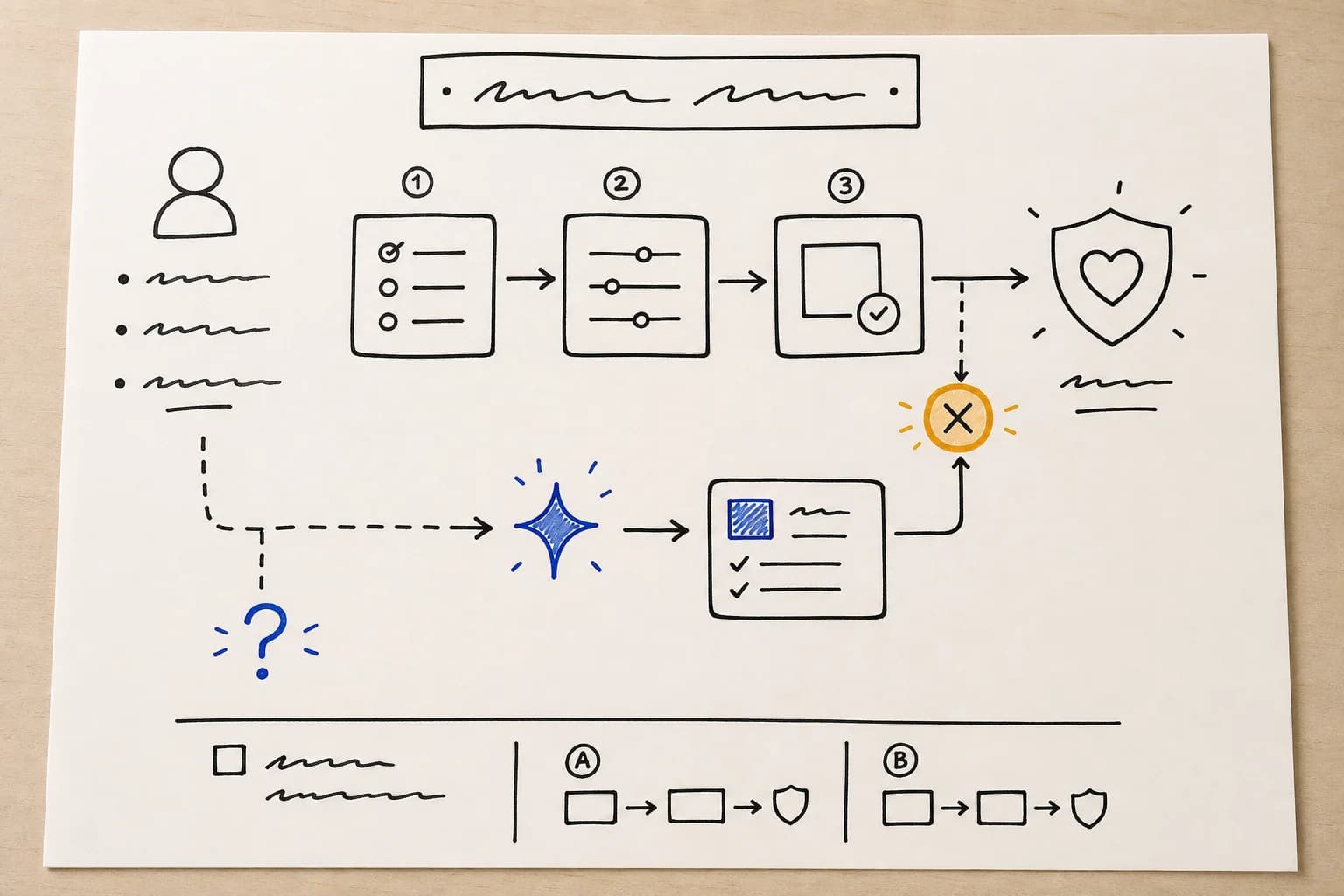
Final challenge: a one-page thinking map

Choose real material: meeting notes, a product idea, a project problem, or something you have struggled to explain.

A complete one-page thinking map with a main path, branch, risk, unknown, and next step
Completed exampleThis is not a standard answer. Notice how it shows the topic, main path, risk, unknown, and next step while keeping only what one page can carry.